Pets
The Soldier and Her Bomb Dog: A Reunion Two Years and Half a World in the Making
During her 2019 deployment to Afghanistan, U.S. Army platoon commander Kristen St. Pierre bonded with a bomb-sniffing dog named Chase — then had to leave him behind. When Kabul fell in 2021, Chase vanished, and for two agonizing years she had no idea whether he was even alive. Then a single photograph on a rescue group's social media page set in motion a reunion that would end, improbably, in a rainy gas station parking lot in Knoxville, Tennessee.
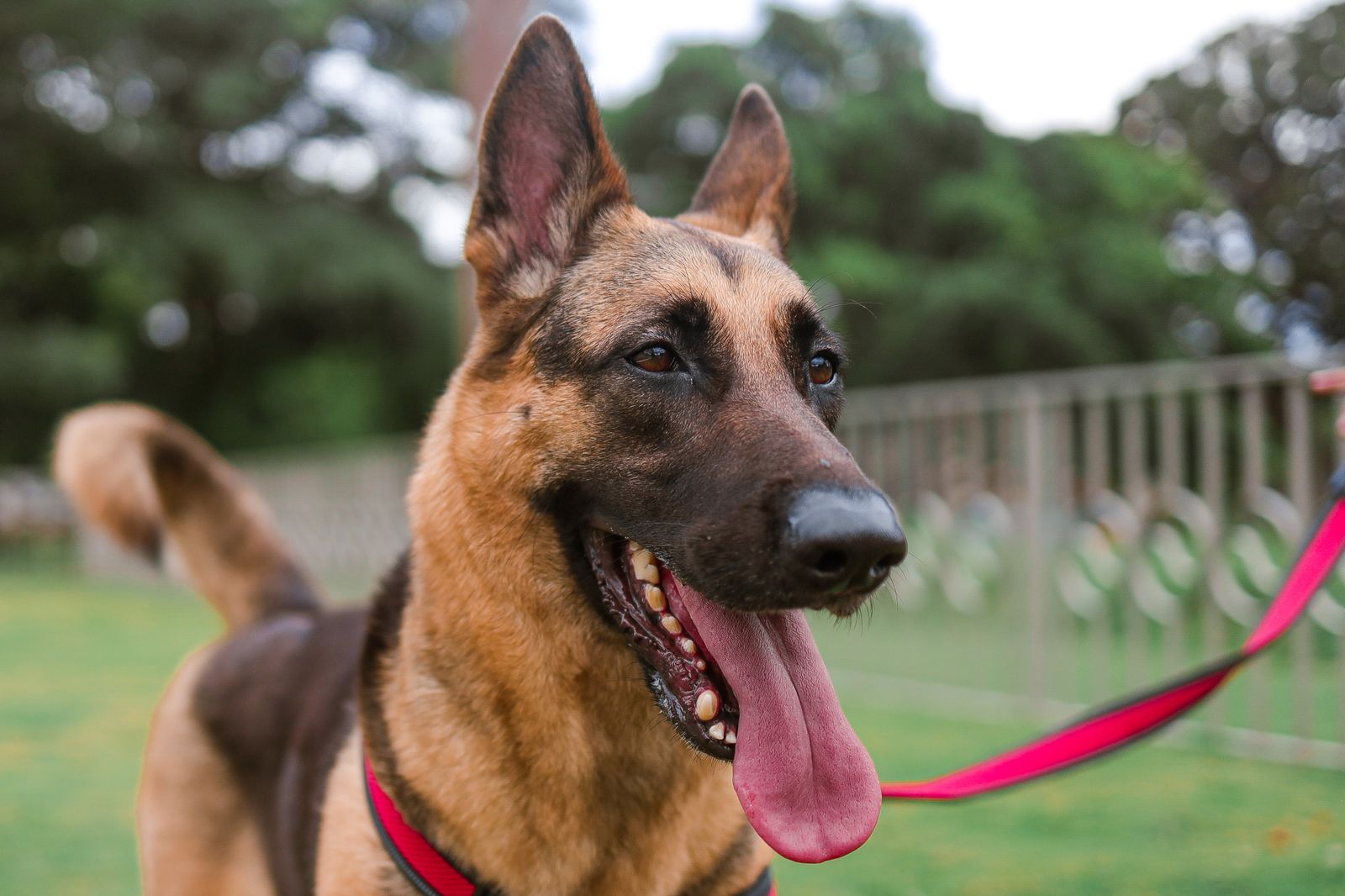
On a rainy Saturday afternoon in Knoxville, Tennessee, in a busy gas station parking lot, U.S. Army platoon commander Kristen St. Pierre threw her arms around a dog she had not seen since she left Afghanistan in 2019. "It's amazing to be with him," she said. For two years she had not known whether the dog she loved was alive or dead. Now, at last, he was pressing his weight against her, alive and whole.
The dog's name was Chase, and their story had begun during St. Pierre's 2019 tour of duty. As a platoon commander, she cared for Chase, a military working dog who accompanied her and her soldiers on their missions in and around Kabul. In the strange, high-stakes rhythm of a combat deployment, the dog became something more than an asset. He was, as she later put it, "a piece of home during our time in Afghanistan." He gave the soldiers a reason to smile on days that offered few of them.
But military deployments end, and dogs like Chase are often left behind to continue their work. When St. Pierre rotated out in 2019, she had to say goodbye. "I didn't really realize how difficult saying goodbye would be," she admitted. She told herself he was in good hands, that he had a job to do, and she carried his memory home with her.
Then, in the summer of 2021, Afghanistan collapsed. As U.S. troops withdrew and desperate Afghans fled by the thousands, the country descended into chaos, and in that chaos Chase simply disappeared. There was no chain of custody to follow, no kennel to call, no way to know what had become of one dog amid the fall of an entire nation. For St. Pierre, the not-knowing was its own kind of grief. Was he still alive? Had he been abandoned, killed, lost to the confusion? Month after month, she had no answers.
What she did not know was that half a world away, another American woman was quietly refusing to let Afghanistan's animals be forgotten. Charlotte Maxwell-Jones, the founder of Kabul Small Animal Rescue, had stayed behind when so many others left. Even after nearly all of her staff fled the country in 2021, she rebuilt her operation, becoming, as she described it, the only animal rescue in Afghanistan. Working with an all-male staff and a handful of foreign women, she cared for hundreds of dogs, cats, and an unlikely menagerie that at times included tortoises, chickens, sheep, and peacocks. She navigated the numbing bureaucracy of export permits, chasing signatures across the Ministry of Agriculture, the Ministry of the Interior, the border police, and beyond. It was, she said, "exhausting and onerous" work, and she kept doing it because she believed "that animals' lives actually matter just as much as other lives."
The two women's paths finally crossed through a twist of social-media fate. St. Pierre had begun following news reports and Instagram posts about Afghanistan's stranded animals, and one day, scrolling through Kabul Small Animal Rescue's page, she stopped cold. There, in a photograph, was Chase. She could scarcely believe it. She reached out immediately, told the rescue about their time together in Afghanistan and the work Chase had done, and asked whether she could adopt the dog she had once been forced to leave behind.
The answer was yes — but yes was only the beginning. To bring Chase to the United States, Maxwell-Jones had him microchipped, revaccinated, tested for rabies, and cleared through a battery of blood tests. She flew the animals to Dubai, then coordinated onward flights to Washington, D.C., where they were officially imported and screened by the Centers for Disease Control and Prevention before release. "Since we got him back last November, that's been the plan from Day 1," Maxwell-Jones said upon arriving at Dulles Airport with the dog.
And then came the parking lot in Knoxville. After two years of silence and fear, St. Pierre finally held Chase again, the rain falling around them, both of them home in a way that had once seemed impossible. To her, the reunion was proof of something larger than one dog and one soldier. Getting Chase back, she said, was "surreal," and it showed her that "humanity is still occurring in Afghanistan."
Today, Chase is settling into a gentler life at Fort Benning, Georgia, where St. Pierre and her husband live. Despite everything he endured — the war, the abandonment, the years lost in a collapsing country — he still, as St. Pierre marveled, "maintained trust in humans." He loves nothing more, she says, than getting his belly rubbed. After everything, the bomb dog who once patrolled the streets of Kabul now has only one mission left: to be loved.
A platoon commander, a bomb dog left behind in Kabul, and a rainy gas station reunion two years later.