Music
Coda to a Cold Case: The Stolen Stradivarius That Waited 35 Years to Come Home
In May 1980, a Stradivarius violin was snatched from the office of virtuoso Roman Totenberg after a Cambridge concert. He never played it again, dying in 2012 still believing a former student had taken it. In 2015, the thief long dead, his ex-wife opened a locked case and unwittingly cracked one of classical music's most enduring mysteries.
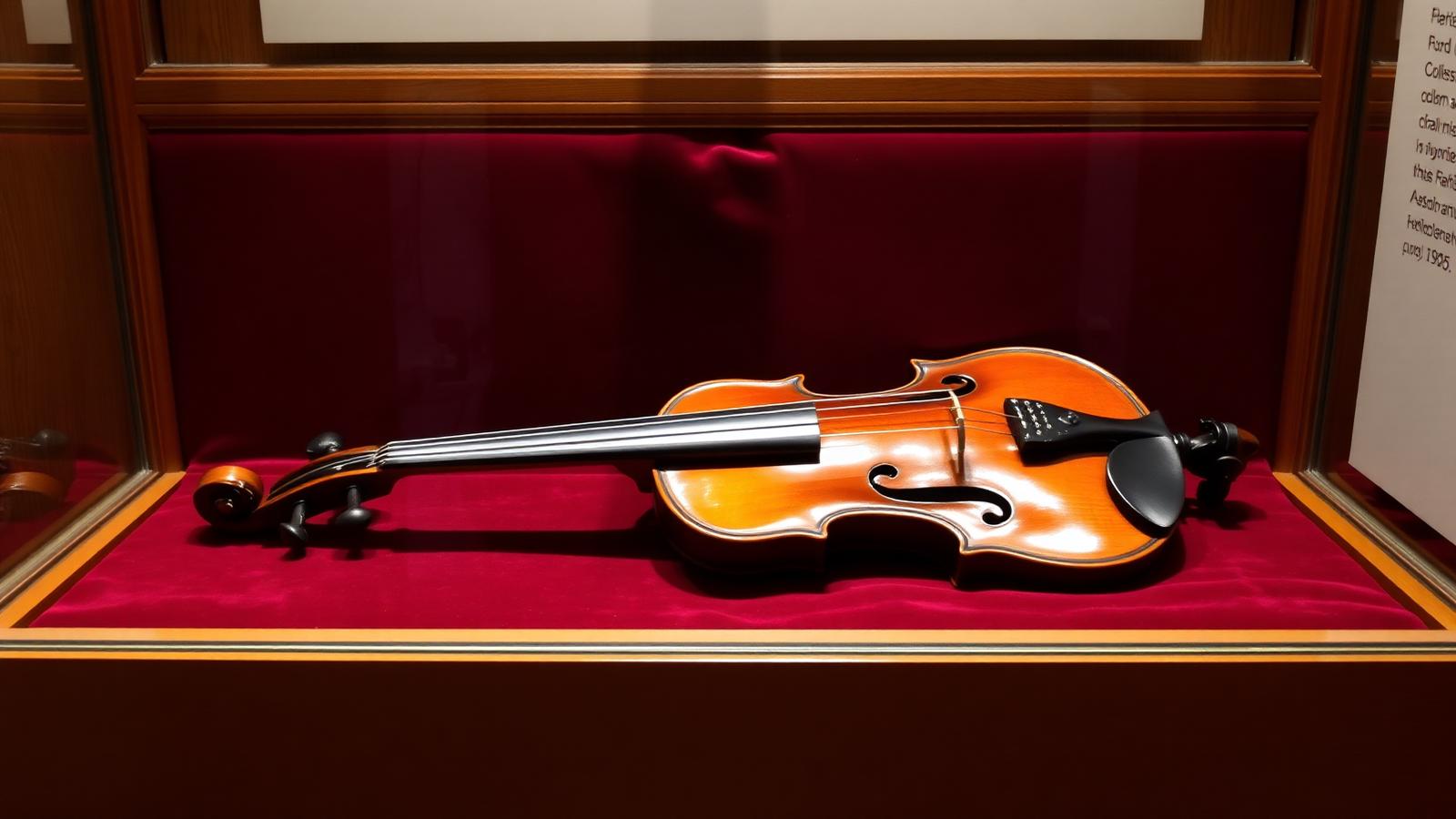
Roman Totenberg was a Warsaw-born child prodigy who became one of the great violinists and teachers of the 20th century, performing into his 90s and shaping generations of students at Boston University. In 1943 he bought the instrument that would define his life: the "Ames" Stradivarius, crafted by Antonio Stradivari of Cremona in 1734, for which he paid $15,000. For the next 38 years it was, in his daughter Nina's words, his "musical partner," his voice on the great stages of the world.
Then, on May 13, 1980, it was gone. After performing at the Longy School of Music in Cambridge, Massachusetts — where he was then director — Totenberg lingered in the lobby to greet well-wishers, leaving the violin in his adjacent office and dressing room. When he returned, the Stradivarius, along with a couple of valuable bows, had vanished. Its empty case later turned up in the basement of the school, but the violin itself had disappeared into thin air.
Suspicion fell almost immediately on one man: Philip S. Johnson, a young, aspiring violinist who had been seen circling Totenberg's office that evening. Totenberg was privately certain Johnson had taken it. But certainty was not evidence. Police, the family later learned, could never assemble enough for a search warrant, and the case went cold. It stayed cold for the better part of 35 years, an open wound in the classical-music world and a private grief for the Totenberg family.
What Johnson did with his prize was, in Nina Totenberg's telling, "an O. Henry tale." He never sold it, never performed publicly with it in any way that surfaced, and never revealed the secret. He simply kept the priceless instrument closeted away, a hidden possession that seemed almost to hollow out his life — he had, as she put it, "no career to speak of" and died of pancreatic cancer in 2011 at age 58. He left the locked violin case to his ex-wife. Tragically, Roman Totenberg died in 2012 at the age of 101, never learning that his beloved instrument was, at that very moment, sitting silently in the belongings of the man he had always suspected.
The break came in June 2015. Johnson's former wife, cleaning house, opened the combination-locked case he had left her and found an old violin bearing the stamp "Antonius Stradivarius Cremona 1734." Not knowing its origin or worth, she sought an appraisal and was directed to Phillip Injeian, a respected Pittsburgh-based violin maker and dealer. When Injeian saw the emailed photos, they looked "so remarkably good" that he cross-referenced the compendium of known Stradivari instruments made in 1734 — and realized he might be looking at the famous Ames Stradivarius, stolen decades earlier and never recovered.
Injeian arranged to meet the woman at a Manhattan hotel on June 26, 2015. Inspecting the dark grain of the wood, the inlay, the varnish, the small pearls on the tuning pegs, and measuring the instrument against archival records, he grew certain. "Well, I've got good news for you, and I've got bad news for you," he told her. "The good news is that this is a Stradivarius. The bad news is it was stolen 35, 36 years ago from Roman Totenberg." He immediately contacted the FBI's Art Crime Team. Within hours, agents were at the hotel, and the woman — who had wanted to return the violin to its rightful owners — voluntarily relinquished it.
On the last day of June, FBI Special Agent Christopher McKeogh called Nina Totenberg — herself NPR's veteran legal-affairs correspondent — with the words: "I believe we've recovered your father's violin." On August 6, 2015, at a ceremony at the U.S. Attorney's office in Manhattan announced by U.S. Attorney Preet Bharara, the Ames Stradivarius was formally returned to Totenberg's three daughters — Nina, federal judge Amy Totenberg, and Jill Totenberg — the first time they had laid eyes on it since 1980. They joked among themselves that it was the return of the family's "fourth daughter." No one was charged; with Johnson long dead, prosecutors considered the case closed.
The violin, remarkably undamaged and still strung with the gut strings Totenberg favored in 1980, was sent to Rare Violins of New York for a painstaking restoration. In 2017 it returned to the stage, played first at a private New York concert by Mira Wang, one of Totenberg's former students. The family later sold the instrument, and it has since been loaned to rising young violinists — including Nathan Meltzer — ensuring that, as Nina Totenberg put it, the violin's "throaty voice" would "thrill audiences in concert halls around the world" once again.