Memorabilia & Treasures
The Moon Dust Bag That Vanished From NASA, Sold for $995, and Fetched $1.8 Million
The bag that carried humanity's first samples of lunar rock and dust back from the Moon in 1969 went missing from a federal evidence room, turned up in a disgraced museum director's garage, and was mistakenly sold for $995 at a government forfeiture auction—only for NASA to discover it was the real Apollo 11 sample bag, ignite a legal fight over who actually owned it, and watch it sell at Sotheby's for $1.8 million.
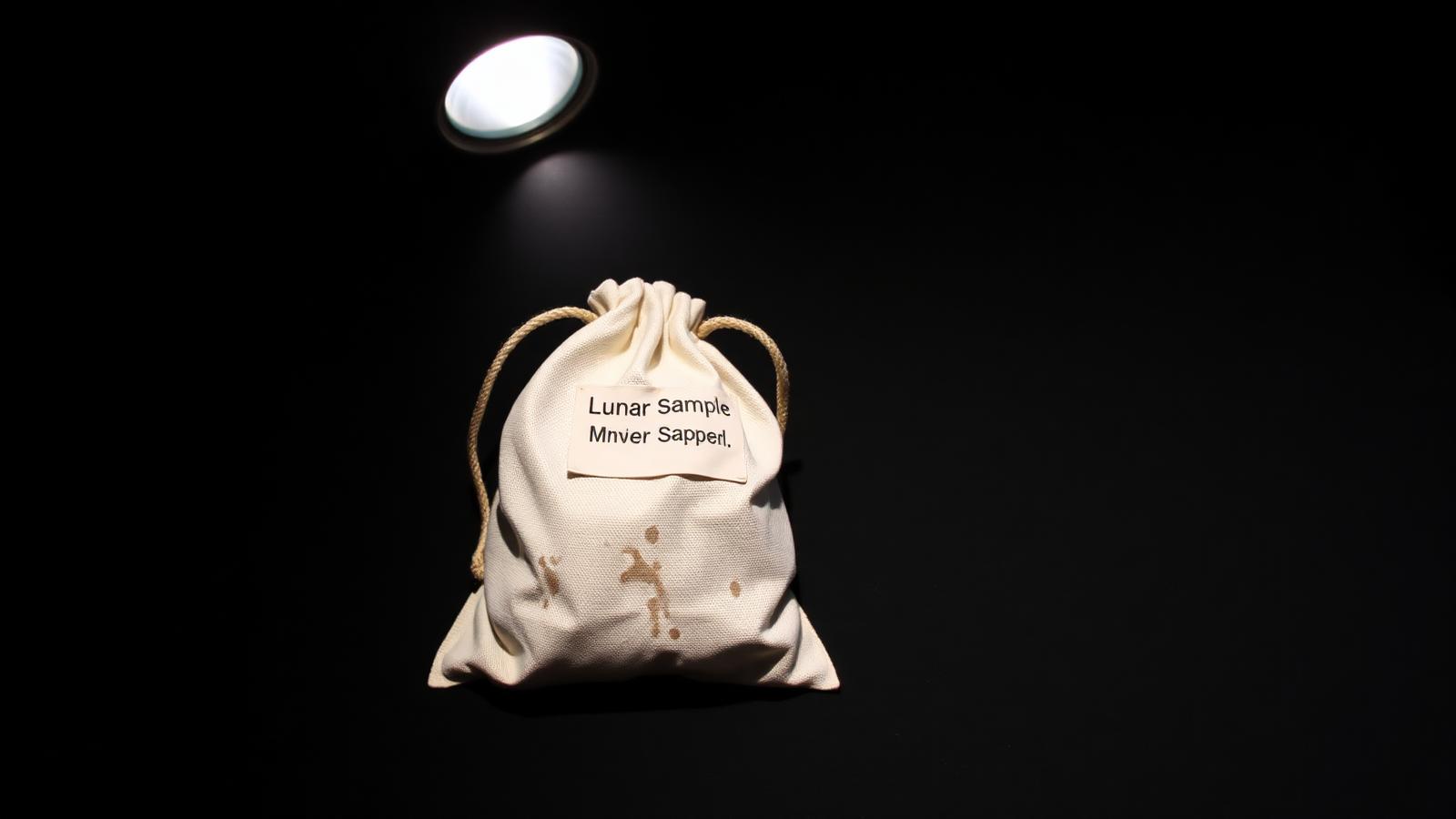
The lunar sample return bag is not glamorous to look at: a roughly foot-long, zippered white pouch made of Beta cloth, designed to hold the first rocks and dust that Neil Armstrong and Buzz Aldrin scooped up during their July 1969 moonwalk. It was the container in which the earliest lunar samples ever collected made the journey back to Earth aboard Apollo 11. For decades it sat in NASA's custody as an artifact of largely internal, cataloging-level interest rather than a public treasure—until it disappeared.
The bag had been loaned to the Cosmosphere, a space museum in Hutchinson, Kansas, for research and display purposes. It went missing from NASA's Johnson Space Center inventory sometime after that loan, and its disappearance became entangled with a much larger scandal: Max Ary, the Cosmosphere's longtime executive director, was investigated by the FBI for stealing and selling space artifacts entrusted to the museum, including items on loan from NASA and the Smithsonian. Ary was convicted in 2005 on multiple counts of theft and fraud tied to the sale of space memorabilia he did not own. During the investigation into his personal effects, the lunar sample bag was found in his garage among a trove of other misappropriated artifacts.
What happened next is the part that turned a recovered-evidence footnote into a genuine legal saga. The bag was seized as evidence in the Ary case and ended up in the custody of the U.S. Marshals Service, which is responsible for auctioning off forfeited property. Somewhere in that process, the bag's true identity and significance were lost in the paperwork. It was mislabeled and listed for auction as an unremarkable "lunar sample bag" without any indication that it was the specific artifact used on Apollo 11—the mission that first put humans on the Moon. It went up for auction not once but three times, in 2011, 2013, and 2014, and drew no bidders each time, presumably because nothing in the listing signaled its actual importance.
On the fourth attempt, in February 2015, an Illinois attorney named Nancy Lee Carlson placed a winning bid of $995. Carlson had a hobby interest in space memorabilia and decided to have the bag authenticated before deciding what to do with it. She sent it to NASA's own Johnson Space Center for testing. NASA's analysis, using scanning electron microscopy and other techniques on residue embedded in the bag's fabric, confirmed the material was genuine lunar dust consistent with the Apollo 11 mission—meaning Carlson had, unknowingly, bought the actual artifact that carried the first Moon samples back to Earth for less than a thousand dollars.
Rather than returning the now-famous artifact, NASA refused to give it back, arguing it was a national treasure that should never have been auctioned in the first place and therefore belonged to the government regardless of the sale. Carlson sued to establish her ownership. The case landed before U.S. District Judge J. Thomas Marten in Kansas, who ruled in Carlson's favor: while he agreed the bag should never have been sold, the forfeiture auction was legally valid once completed, and NASA had no right to simply keep an item it had already, if mistakenly, sold to a private citizen. NASA returned the bag to Carlson in February 2017.
Carlson then consigned the bag to Sotheby's, timing the sale to July 20, 2017—the 48th anniversary of the Apollo 11 moonwalk. It sold for $1,812,500, instantly becoming one of the most valuable space-flown artifacts ever auctioned, a stunning outcome for an item the government had tried to give away for under $1,000 three separate times.
The story had one more twist. In 2019, Carlson sued NASA again, alleging the agency had damaged the bag and improperly retained lunar dust samples extracted from it during the authentication testing, rather than returning all of the material along with the bag itself. That dispute was eventually settled, with the bulk of the residual lunar dust samples returned to Carlson; a portion was later sold separately at a Bonhams auction in 2022 for roughly $500,000, closing out one of the strangest chains of custody in the history of space artifacts—from Neil Armstrong's hand, into evidence, into a museum director's garage, onto a bargain-auction listing, and finally into a $1.8 million sale forty-eight years after it first touched the Moon.
$995 recovered