Art & Antiquities
The Painting That Was Stolen Twice: The Two Recoveries of Munch's "The Scream"
Edvard Munch's "The Scream" — the most recognizable cry of anguish in art history — was stolen not once but twice, in daring heists twelve years apart. Both times, against long odds, Norway got its masterpiece back.
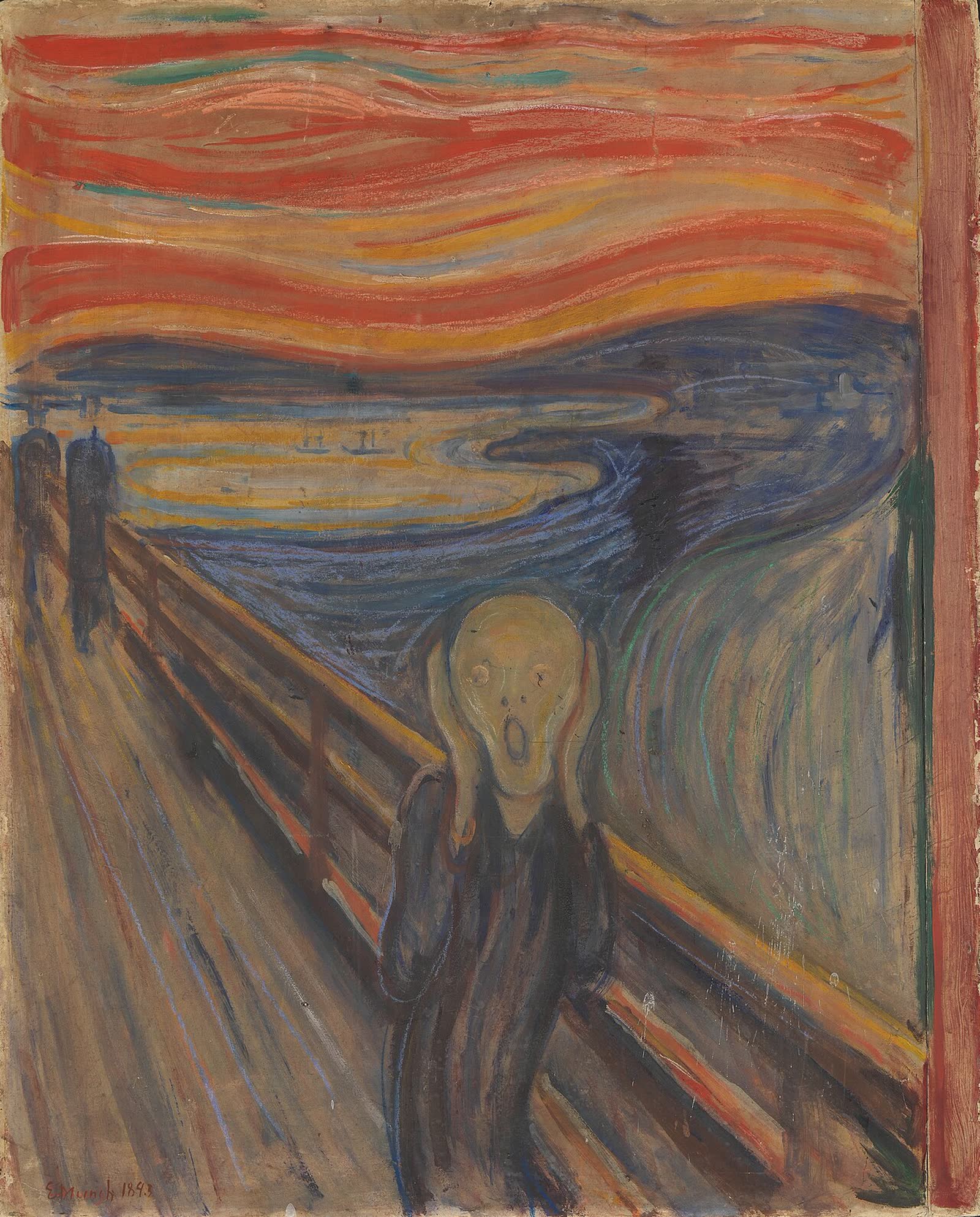
On the morning of 12 February 1994, as the world's cameras pointed toward Lillehammer for the opening ceremony of the Winter Olympics, two men leaned a ladder against the National Gallery in Oslo, smashed a window, and cut Norway's most famous painting from the wall. The whole thing took barely a minute and a half. One thief reportedly fell from the ladder on the way out. On their way, they left behind a note of pure mockery: "Thousand thanks for the bad security!".
The painting they took was the 1893 version, moved down to a second-story gallery as part of the Olympic festivities. When a ransom demand of US$1 million arrived in March, the Norwegian government refused to pay. Instead, Norwegian police set up a sting operation with help from Britain's Scotland Yard undercover unit (SO10) and the Getty Museum. A British detective named Charles Hill posed as an American middleman offering to buy the work for the Getty. On 7 May 1994, the painting was recovered undamaged in a hotel in Åsgårdstrand, about 40 miles south of Oslo — a town where Munch had once kept a summer home. Hill later recalled finding it under a trap door in a summer-house kitchen and knowing it was genuine by the wax marks left when Munch blew out a candle beside the canvas. In January 1996, four men were convicted, including Pål Enger, a former footballer who had already stolen a Munch — "Love and Pain" — in 1988. Their convictions were later overturned on appeal, because the British agents had entered Norway under false identities.
Twelve years later, the second act was far more brazen. On 22 August 2004, two masked, armed men walked straight into the Munch Museum in Oslo in broad daylight, waved a pistol at terrified visitors, and tore the 1910 version of "The Scream" and Munch's "Madonna" off the walls before fleeing to a waiting car. This time there was no note, no ransom the government would entertain — only a two-year void, and a growing dread among curators that the paintings might have been destroyed to erase evidence.
The investigation dragged. In 2005, Oslo's city government offered a reward of 2 million kroner for information, and police arrested a first suspect that April. In May 2006, three men were convicted for planning or carrying out the robbery and sentenced to between four and eight years in prison; two of them, Bjørn Hoen and Petter Tharaldsen, were ordered to pay the City of Oslo staggering compensation of 750 million kroner — roughly US$117 million — for the crime. Yet the paintings themselves remained missing.
Then, on 31 August 2006, lead investigator Iver Stensrud stepped before reporters in Oslo with astonishing news. "For two years and nine days, we have been diligently searching for these artworks, and now we have located them," he said. Both works had been recovered in what police described only as an "ordinary police action." To this day, authorities have never revealed exactly how or where they were found. No reward had been paid, Stensrud said, and police were "100 percent certain they are the originals".
The paintings had not escaped unscathed. "The Scream" bore moisture damage in its lower left corner; "Madonna" had several tears and two holes in the figure's arm. Even so, the damage was "much less than feared." Before conservation, the museum briefly displayed the wounded canvases; some 5,500 people filed past them in just five days. After a careful restoration, the two works returned to public view in May 2008 in an exhibition pointedly titled "Scream and Madonna — Revisited".
Today a version of Munch's cry of existential dread is always on display at the MUNCH museum in Oslo, behind reinforced glass and modern security — a masterpiece that twice slipped into the underworld and twice came home.