Art & Antiquities
The Takeaway Rembrandt: The Little Portrait That Kept Getting Stolen
Rembrandt's palm-sized *Portrait of Jacob de Gheyn III* holds a record no masterpiece wants: the Guinness World Record for the most-stolen painting on Earth. Snatched four times from London's Dulwich Picture Gallery between 1966 and 1983 — spirited off in a bicycle basket, hidden under a graveyard bench, and stashed at a German train station — the "Takeaway Rembrandt" always found its way home.
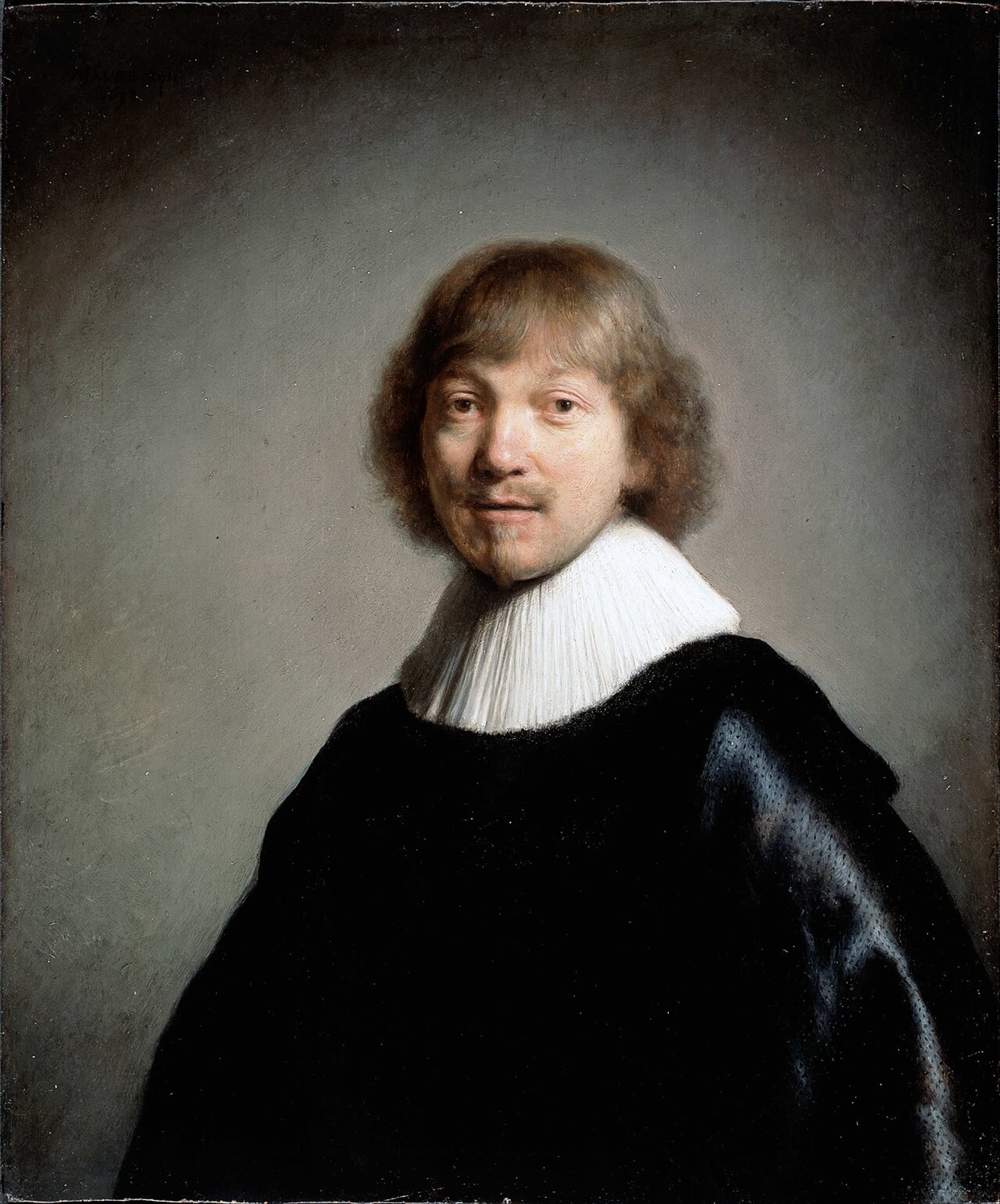
At just 29.9 by 24.9 centimeters — under 12 by 10 inches — Rembrandt's 1632 oil-on-oak portrait of the Utrecht engraver Jacob de Gheyn III is one of the smallest works the Dutch master ever painted. That diminutive size is precisely its curse. Small enough to tuck under one arm and walk out with, the picture has been stolen four separate times from the Dulwich Picture Gallery in south London, earning it a spot in the Guinness Book of World Records as the world's most stolen painting and the wry nickname "the takeaway Rembrandt".
The first theft came on New Year's Eve, 31 December 1966. Thieves broke into Dulwich — England's oldest public art gallery — by removing a panel from a rarely used door, an opening so small that only modest, frameless works could pass through it. Even so, they made off with eight Old Master paintings, including three Rembrandts, three Rubens, a Gerrit Dou and an Adam Elsheimer, together worth at least £3 million — the equivalent of roughly $90 million today. Detective Superintendent Charles Hewett led the case, and within days all the paintings were recovered — some found by a man walking his dog, the rest in a nearby cemetery. Only one thief, an unemployed ambulance driver named Michael Hall, was caught; he was sentenced to five years in prison.
The gallery, remarkably, did not upgrade its security — the paintings were still neither alarmed nor fixed to the wall — and in 1973 the vulnerability told. A 24-year-old visitor simply lifted the little Rembrandt off the wall, dropped it into a plastic bag, and rode off with it in his bicycle basket. Local police detained him within minutes, and the painting was returned once again.
The third theft, in 1981, played out like a caper. Two men entered the gallery in broad daylight; while one distracted the staff, the other quietly unhooked the portrait and carried it out under an overcoat. A fortnight later, the gallery's director Giles Waterfield received a telephone call from a German businessman offering to broker a deal. The sting operation that followed involved undercover agents, invented pseudonyms, forged bank drafts and trips to Amsterdam — and within a month the picture was back on the wall.
Finally the gallery invested in a proper security system — and it still wasn't enough. In 1983, thieves scaled a ladder to the roof, smashed a skylight, dropped down into the galleries, and pried the reframed painting from the wall with a crowbar. This time the alarm worked, and police arrived within three minutes — but the thieves had already vanished. The case went cold for three years. Then, in October 1986, investigators acting on a tip found the painting in the left-luggage office of a train station serving a British army garrison in Münster, West Germany, wrapped and unharmed. No arrests were ever made for that final theft.
Across the four thefts, the portrait turned up in a bizarre catalogue of hiding places — a luggage rack, the back of a bicycle, and underneath a bench in a graveyard in Streatham, south London. Waterfield, exhausted by the ordeal, once confessed that "the temptation is to lock the wretched thing away and put up a color photograph".
Since 2010 the picture has been protected by an upgraded security system. Its notoriety, ironically, is now part of its protection: the Takeaway Rembrandt is so famous that reselling it would be all but impossible. Thieves still eye Dulwich — in November 2019 a burglar tore two other Rembrandts from the wall before being confronted and fleeing empty-handed — but Jacob de Gheyn III, the quizzical young engraver on his little oak panel, still hangs in gallery five.