Memorabilia & Treasures
Pickles the Dog and the Week England Nearly Lost the World Cup
Four months before England hosted the 1966 World Cup, the tournament's centerpiece trophy vanished from a London exhibition hall in broad daylight. A week of ransom notes and Scotland Yard dead ends followed—until a mongrel named Pickles, sniffing around a hedge on his evening walk, found it wrapped in newspaper and led his owner to a reward, a headline, and a small piece of football history.
On March 20, 1966, the Jules Rimet Trophy—the gleaming gold-plated statuette awarded to the World Cup's winning nation since 1930—was on public display at Westminster Central Hall in London as part of a stamp exhibition. It was left unguarded overnight behind a glass case with, by some accounts, only a padlock and a single security guard's rounds standing between it and the street. Sometime that night, thieves forced open a rear door, pried the cabinet open, and walked out with the trophy. Its absence was discovered the next morning, and the theft became front-page news within hours: the World Cup, due to be presented at Wembley that summer, was gone, and England—the host nation—was on the hook to explain how.
Scotland Yard's investigation moved fast but got nowhere useful. Within two days, Joe Mears, chairman of the Football Association, received a ransom note demanding £15,000 for the trophy's safe return, signed by someone using the alias "Jackson." Mears, who had a history of heart trouble, arranged to meet the extortionist's go-between at a rendezvous in south London, with police trailing at a distance. The handoff went wrong—the man grew suspicious, fled, and was chased down and arrested. He turned out to be Edward Betchley, a small-time crook with a record for minor theft, but he was not the man who had actually broken into Westminster Central Hall. Betchley was charged with demanding money with menaces and later convicted, but under questioning he gave the police nothing that led to the trophy itself, and the identity of the actual burglars was never conclusively established.
With the ransom plot exposed and no trophy in hand, the FA and the police faced a genuine crisis. England was scheduled to host the entire tournament in a matter of months, and the World Cup itself was missing with no leads. Quietly, a replica was commissioned as a fallback in case the original was never found—an insurance policy against total embarrassment.
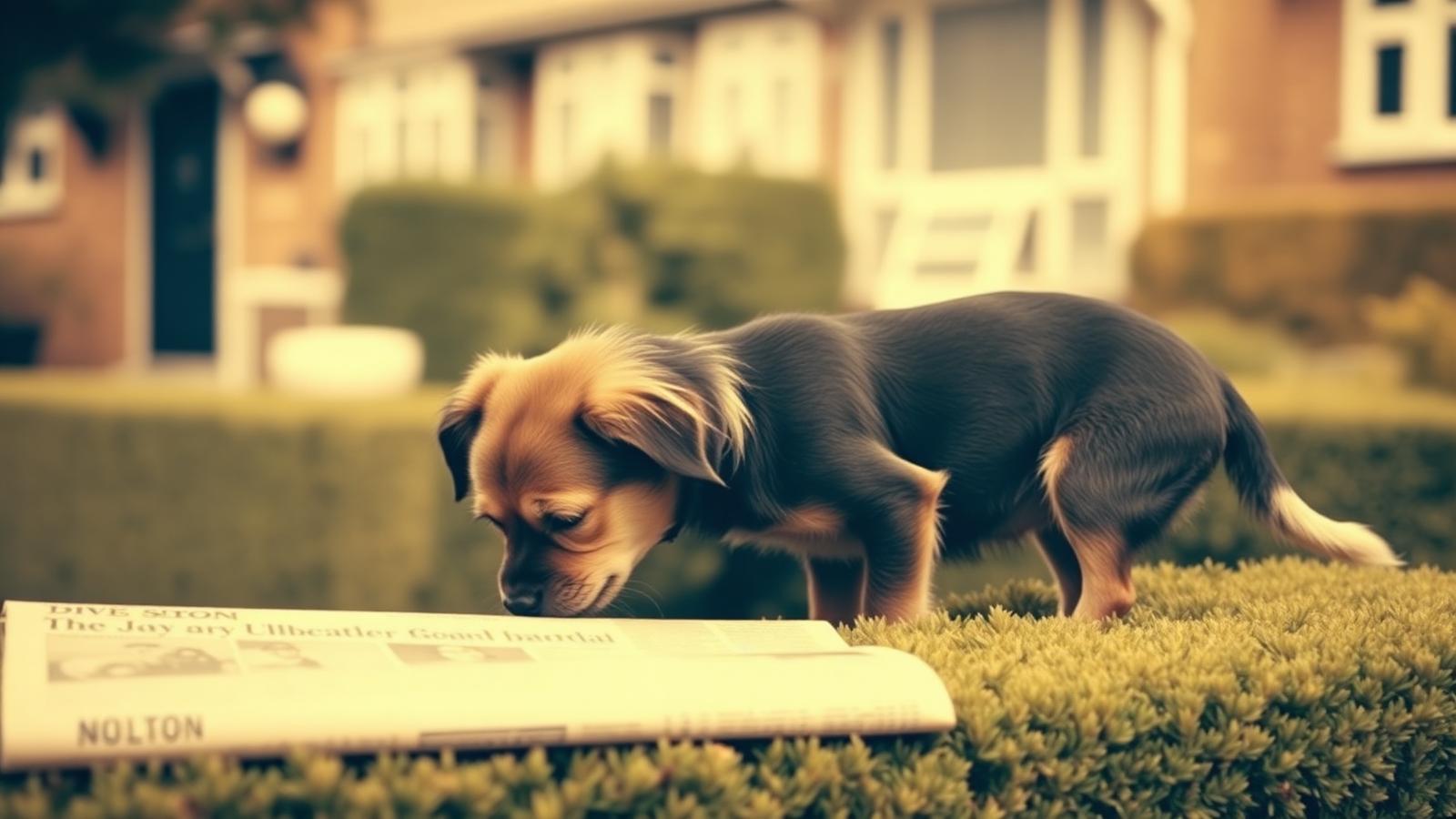
The break came from the most unlikely source imaginable. On March 27, 1966—one week after the theft—a Thames lighterman named David Corbett took his dog, a black-and-white mongrel named Pickles, out for an evening walk in Upper Norwood, south London. Pickles pulled toward a parcel wrapped in newspaper lying beneath a hedge outside a neighbor's garden gate. Corbett initially tried to pull him away, assumed it was rubbish, then noticed something metallic glinting through a torn edge of the newspaper. He tore the wrapping further and found himself looking at the missing World Cup, its base separated but the statue itself intact.
Corbett took the trophy to the local police station, where officers were initially skeptical he wasn't simply hoaxing them, before quickly confirming it was genuine. The recovery made instant global headlines—Pickles was as much a celebrity as the trophy itself, appearing on television, at a banquet held in his honor, and even, according to some retellings, in a small film cameo. Corbett received a reward reported at roughly £5,000 (later accounts cite figures up to £6,000), a substantial sum in 1966, along with a share of continued media appearances built around his dog's unlikely find.
That summer, the recovered trophy was presented at Wembley Stadium after England beat West Germany 4–2 in the World Cup final—the only World Cup England has won to date. The Jules Rimet Trophy that Pickles found under a hedge is the same trophy England's captain, Bobby Moore, lifted in front of the Queen. It is a footnote to football history that gets stranger with distance: the world's most prestigious sporting trophy, missing for a week in the run-up to the tournament it was built for, was ultimately found not by Scotland Yard's detective work but by a dog on a routine walk who happened to be more thorough than the men paid to find it.
The postscript is bittersweet rather than triumphant. The same Jules Rimet Trophy was stolen again in 1983, this time from the Brazilian Football Confederation's headquarters in Rio de Janeiro, after Brazil's third World Cup win earned the country permanent possession of it. That theft was never solved and the original trophy has never been recovered—widely believed to have been melted down for its gold. But the 1966 chapter, the one with Pickles, remains a complete story with a happy ending: a trophy lost, a nation embarrassed, and a dog who solved in one walk what a week of police work could not.