Pets
Sam Sam the Kitty Cat Man: A Farm Cat's Eleven-Year Odyssey
Jennifer Ravenel found Sam as an eight-week-old kitten tucked into the crook of a tree, and gave him a South Carolina farm to rule. Then a new puppy arrived, Sam bolted, and eleven years of coyotes, hurricanes, and hard winters passed with no sign of him. When a skinny stray finally walked through the doors of Charleston Animal Society, a single microchip scan revealed a name no one thought they'd ever hear again.
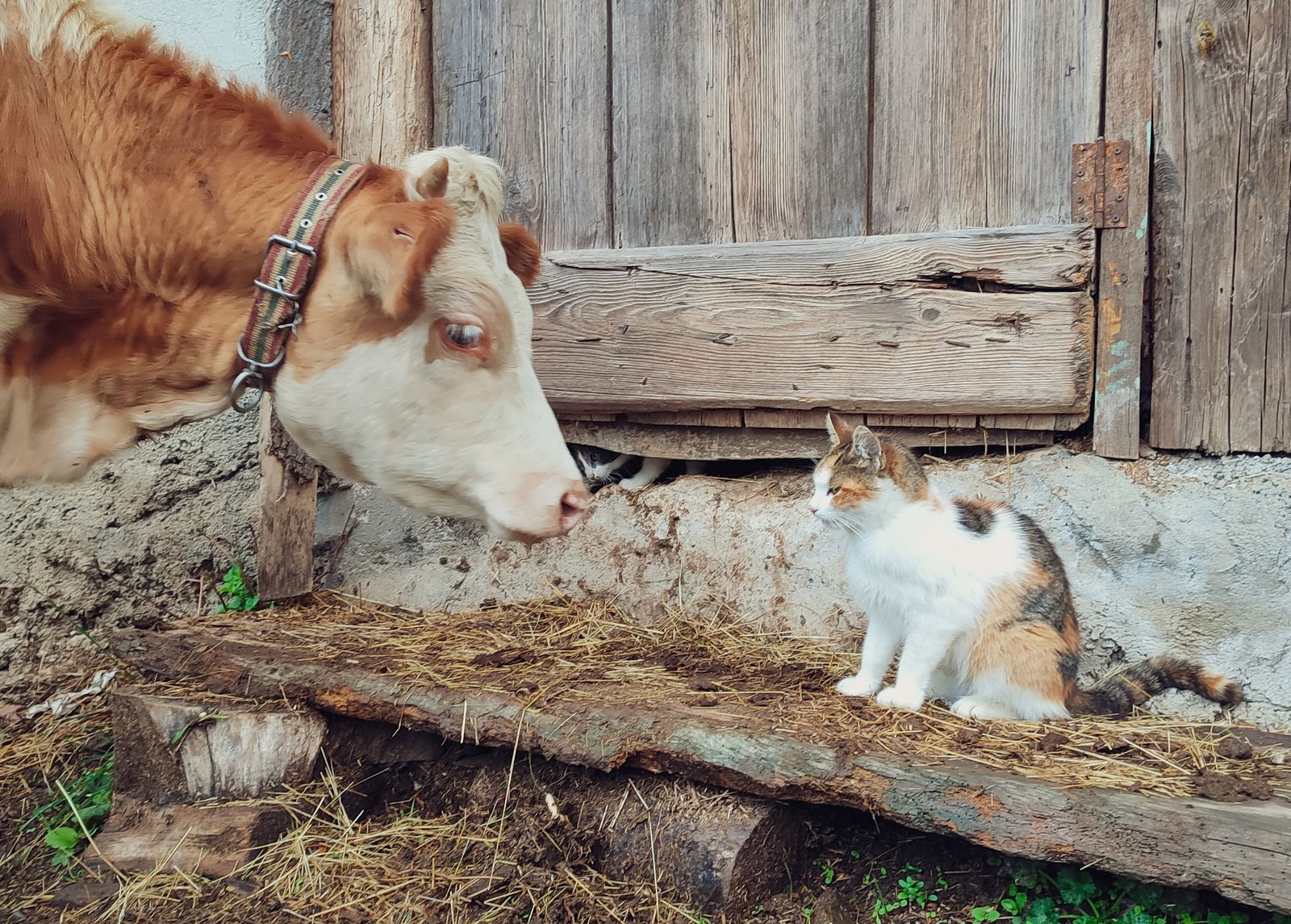
The story of Sam — full name Sam Sam the Kitty Cat Man — began the way so many farm-cat stories do, with a stroke of luck. Jennifer Ravenel, a lifelong animal lover who takes in wayward pets and rehabs injured wildlife at her South Carolina farm, discovered him at just eight weeks old, nestled in the crook of a tree. She brought him home, and Sam won what amounted to the kitten lottery: acres of pasture to roam, cows to survey, a barn to call his own, and a family to love. He weighed a healthy 15 pounds in his prime and had, by all appearances, the perfect life.
Then came Spur. About two years after Sam settled in, Ravenel brought home a young heeler puppy, and Sam made his displeasure known. He did not like the new arrival one bit. Shortly after Spur's appearance, Sam ran away. Ravenel spent the following weeks searching feral cat colonies and combing every corner of her farm, but he had simply vanished. Living in the country came with grim odds. "There are so many coyotes," she said. "I figured he either got killed or something got him." As months turned to years, she made peace with the loss the way rural pet owners often must — assuming the worst and holding onto the good memories.
What Ravenel couldn't have known was that Sam was out there the whole time, weathering a decade of everything the Lowcountry could throw at a small animal. In the years he was gone, he lived through hurricanes and snowstorms and brutal weather, likely surviving in and around a feral colony less than a block from where he'd once lived — though the colony's caretakers had never spotted him, and no one thinks to scan a feral cat for a microchip. Somewhere along the way he contracted FIV, a feline immunodeficiency virus commonly spread through bite wounds, a quiet clue that his years outdoors were anything but easy.
The turning point came earlier in 2024, when a skinny stray cat came through the door of Charleston Animal Society — one of countless found felines the shelter takes in. As they do with every arrival, the team scanned him for a microchip, hoping for the high-pitched beep that means an animal has a home to return to. The machine pinged. The office computer produced a match: Sam, missing since 2013. The cat who walked in weighed just 7.5 pounds — half the body weight he'd carried the day he disappeared, emaciated and nearly unrecognizable, eleven years older and seven pounds lighter than the robust barn cat Ravenel remembered.
When the shelter called, Ravenel didn't believe it. She'd gotten a voicemail saying, "We have your cat, Sam." She was sure it was a joke — there was no way, after eleven years, that this could be real. But she drove to the shelter anyway. When she looked into the bright blue, "too-close-together" eyes of the shaggy, skinny cat in front of her, she was shocked. She got teary-eyed. And then Sam did something that erased any lingering doubt: he crawled up into her lap. She reached out and scratched his ears, the way he'd always loved. He curled right up, turned his little head toward her, and began to purr. There was hardly a dry eye in the place — a moment so tender it would later move millions who watched it online.
Charleston Animal Society has hosted its share of remarkable reunions in its long history — a pug missing for five years, another cat gone for nine — but Sam's eleven-year homecoming stood apart. There was never any question in Ravenel's mind that she would take him back. The only lingering worry was Spur, the very dog whose arrival had sent Sam running all those years ago. But time, it turns out, heals most wounds. When the two former enemies met again, they circled each other warily for a moment before Sam, in Ravenel's words, "cussed him out in cat words." Spur took it in stride, and the two settled into an unlikely peace. These days the aging pair have found a shared hobby: napping just a few feet apart.
Sam has no interest in the great outdoors anymore. He gets about two feet from the door, looks around, and heads straight back to his preferred post at the foot of Ravenel's bed, where he now guards the farm from a safe distance. His FIV isn't troubling him for now; he's just a normal cat, happy to be home, finally carrying a full belly instead of skin and bones. "Having him at the foot of the bed, knowing that he's safe and sound, I'm just elated that he made it," Ravenel said. "This whole thing to me is just a miracle in itself." Her advice to everyone she meets is simple, and it's the reason she got her cat back after more than a decade: microchip your pets.
Ran away from a new puppy in 2013. Walked back through the doors of Charleston Animal Society eleven years later.