Music
Vanished between airports: Jimmy Page's "Black Beauty"
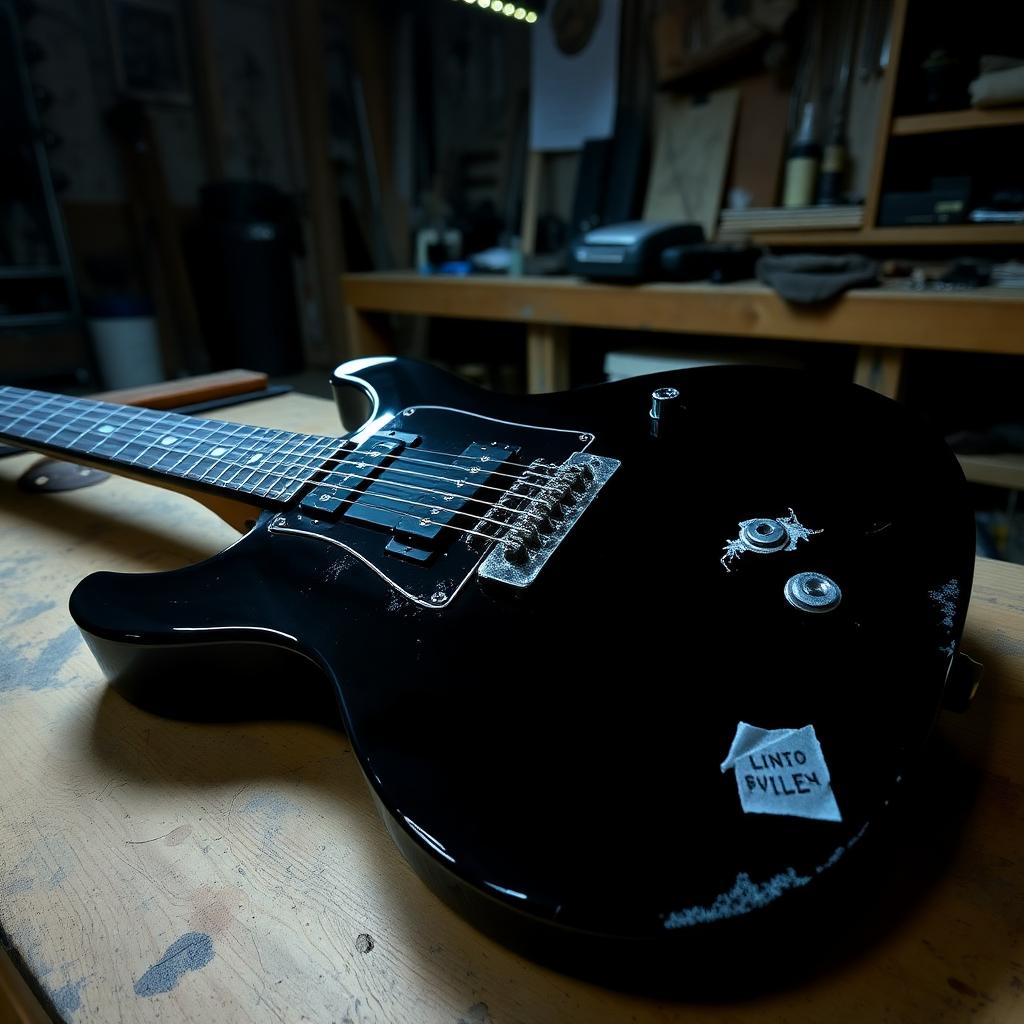
Jimmy Page's heavily modified 1960 Gibson Les Paul Custom disappeared between airports on Led Zeppelin's 1970 US tour. It surfaced 45 years later on a St. Paul repair bench, filled screw holes glowing under UV light.
In those days, nobody could trace it — it had evaporated.
Before Led Zeppelin, Jimmy Page was London's busiest session guitarist, and the guitar under his hands for most of it was a 1960 Gibson Les Paul Custom — "Black Beauty" — bought on layaway when he was 18. He modified it heavily: three humbuckers, extra toggle switches, a Bigsby vibrato. It played the Royal Albert Hall with Zeppelin in January 1970.
Three months later, on the band's fifth North American tour, Page checked the guitar as luggage. It never arrived. Stolen somewhere between the Minneapolis airport, customs, and Canada — reportedly by a baggage handler. "In those days, nobody could trace it," Page later wrote. "It had evaporated." He ran reward ads in Rolling Stone in 1973: no questions asked. Nothing.
The guitar never left the Twin Cities. In the mid-1990s someone walked it into Willie's American Guitars in St. Paul claiming it was Page's. Shop owner Nate Westgor couldn't verify it — the telltale extra switch holes seemed absent — so he sold it to an employee, local musician Paul "Bleem" Claesgens, who gigged with it for two decades, saying only that it "sounded like the voice of God." In 2014, Claesgens brought it back for repairs. Under black light, Westgor found what everyone had missed: filled and refinished screw holes exactly where Page's extra switches had been. A distinctive lightning-bolt figure in the 12th-fret inlay matched film of Page's hands at the Royal Albert Hall, frame for frame.
On November 12, 2015, the guitar went home. Page traded Claesgens a 1959 Les Paul Custom worth around $45,000 as a thank-you, and in 2019 put Black Beauty on display at the Metropolitan Museum of Art's Play It Loud exhibition.
The lo.st takeaway: the guitar spent 45 years within miles of where it disappeared, and even an expert vintage dealer holding it in his hands couldn't confirm what it was. Items can't identify themselves. Give them a way to, and "nobody could trace it" stops being true.