Memorabilia & Treasures
Tupac's Crown Resurfaces: The Rapper's Self-Made Ring Becomes Hip-Hop's Most Valuable Relic
Days before he was murdered in 1996, Tupac Shakur wore a gold crown ring he had designed himself to the MTV VMAs. Nearly three decades later, the ring — safeguarded for years by his godmother — resurfaced at Sotheby's, where it sold for over $1 million and shattered the record for hip-hop memorabilia.
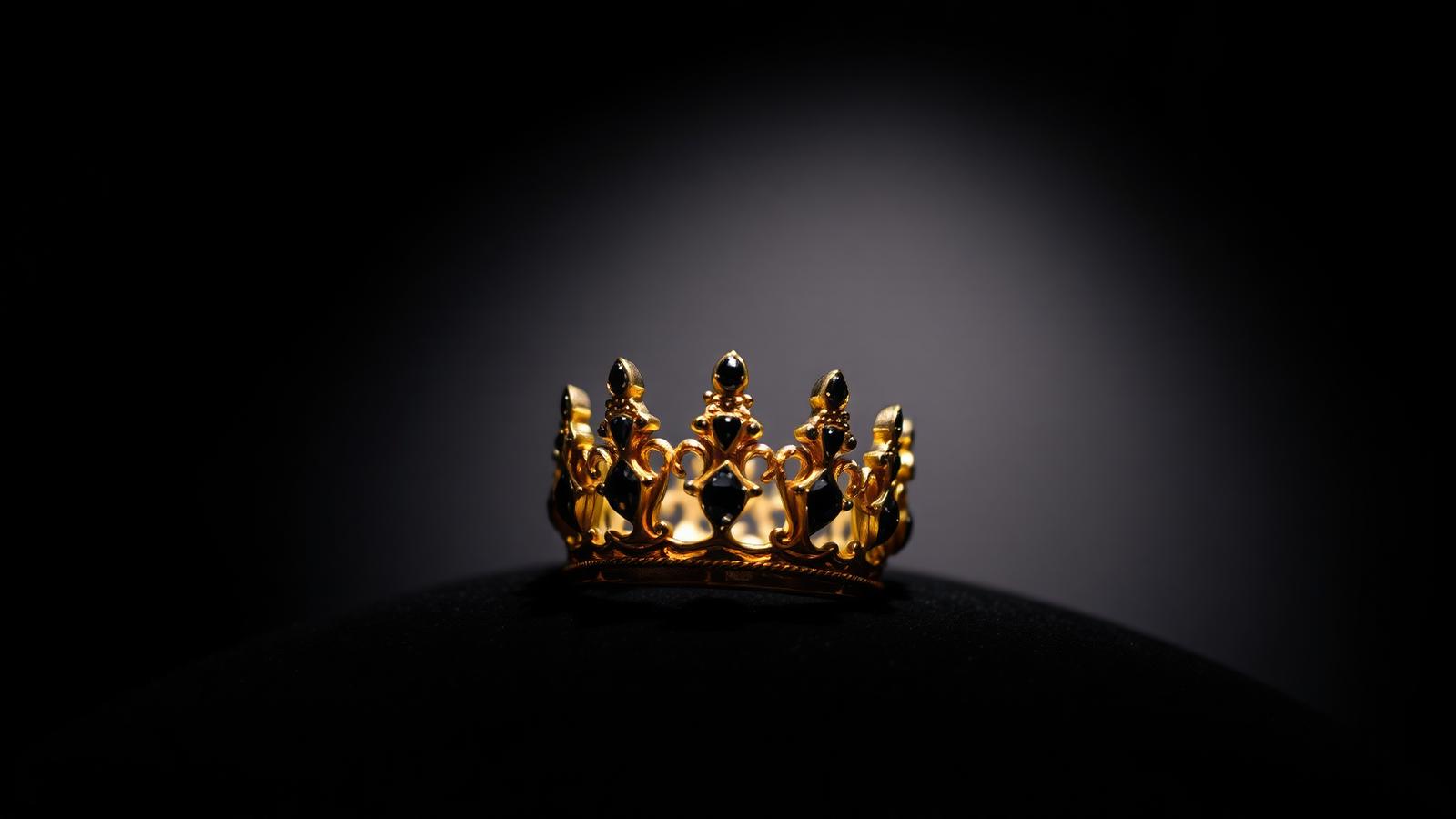
On September 4, 1996, Tupac Shakur made his final public appearance at the MTV Video Music Awards. On his hand was a bold piece of jewelry unlike any other: a thick, diamond-encrusted gold band topped by a prominent crown set with cabochon rubies and diamonds. It was not something a stylist had handed him. Tupac had designed the ring himself, drawing inspiration from his fascination with Niccolò Machiavelli's political treatise "The Prince" and modeling the piece after the crowns worn by European medieval kings. Its creation, his godmother later explained, was "an act of self-coronation".
The ring carried an intensely personal inscription: "Pac & Dada 1996," a reference to his engagement to Kidada Jones, the daughter of Quincy Jones. Just three days after wearing it to the VMAs, Tupac was fatally shot in a drive-by in Las Vegas; he died on September 13, 1996. What could have been a fleeting piece of red-carpet flash instead became one of the last tangible expressions of the artist's boundless creativity — a crown from a man who crowned himself.
After Tupac's death, the ring did not vanish into the anonymity of the memorabilia black market, nor did it circulate through a chain of dealers. Instead, it was quietly kept safe. The ring's creation had been organized by Yaasmyn Fula — Tupac's godmother, one of his most trusted advisors, and his money manager — and she became its steward and eventual owner, holding onto it for decades as the mythology around the fallen rapper only grew. For years it stayed out of public view, a private relic of a very public life.
Its reemergence came in the summer of 2023, timed to hip-hop's 50th anniversary. Sotheby's announced that the crown ring would headline its third annual auction dedicated to hip-hop history, curated by Cassandra Hatton, the house's Global Head of Science and Popular Culture, in collaboration with Mass Appeal and Hip Hop 50. The ring went on public display at Sotheby's New York from July 20 to 24, drawing crowds eager to glimpse a piece of Tupac's mythology up close. Sotheby's set its pre-sale estimate at around $300,000 — a figure that would prove wildly conservative.
On Tuesday, July 25, 2023, the bidding erupted. When the gavel finally fell, Tupac's self-designed gold, ruby, and diamond crown ring had sold for $1,016,000, including buyer's premium — more than three times its estimate. The result made history: it became the most valuable hip-hop artifact ever sold at auction, and the only such item ever to surpass the $1 million mark. The sale, which featured nearly 120 lots of hip-hop history, achieved a total of $1,823,339 — meaning Tupac's ring alone accounted for more than half of the entire auction's proceeds.
The buyer turned out to be one of the genre's biggest living stars: Canadian rapper and songwriter Drake, whom Sotheby's identified as the winning bidder. There was a fitting symmetry in it — a crown passing from one generation's icon into the hands of another. For the culture, the sale was more than a headline-grabbing price. It was a recognition, decades in the making, that the artifacts of hip-hop belong in the same rarefied category as the relics of any great art movement, and that a young man's self-fashioned crown, worn in his final days and safeguarded by someone who loved him, had at last taken its rightful place in history.
$1 million recovered